
Cañón del Combeima provides a good reason to visit Ibagué

The city of Ibagué isn’t known as a major tourist destination and most foreign visitors don’t consider travelling there. To be honest, the city itself isn’t that appealing. There are big shopping centres and some really good restaurants, but most of Ibagué resembles a nondescript small town. The most interesting thing about the capital of Tolima is the fact that there is a square named after Lidice, a village that was destroyed during World War II in Czechoslovakia, with a sculpture commemorating the massacre. I had a chance to meet its author, José Augusto Rivera Castro, who now plans to donate a large version of the sculpture to the Vatican City.

Even if you aren’t a history nerd, there are other good reasons for visiting Ibagué. Its warm weather is really pleasant and there are many green spaces. You can find two impressive places just a short taxi ride from the city centre: Jardín Botánico San Jorge is a great spot for hiking in a beautiful area, and if you like flowers, you shouldn’t miss Orquídeas del Tolima. Ibagué is also used as a starting point for climbing Nevado del Tolima, which is one of the most challenging adventures in Colombia. There is no need to go as far as the volcano, though. The access road via Cañón del Combeima will take you to other amazing sights.

Cañón del Combeima

If you are on a budget, you can simply take bus number 48 to its final stop in Juntas, which is approximately 20 kilometres away from the centre of Ibagué. Most of the road is fine, but there are some bumpy parts as well. You will see numerous restaurants along the way, and that’s where Ibaguereños like spending their weekends.

There isn’t that much to see in Juntas, so when you get off the bus, you can just continue walking down the road. When you cross a bridge, you will see a path to Termalitos through Quebrada Las Perlas. That used to be a popular camping spot, but the whole area is protected, and many activities, including swimming in hot springs, have been banned. It’s still a very nice location for hiking and you are allowed to walk there. Just remember to respect the rules because the river Combeima is Ibagué’s main water source and it needs to be kept pollution-free.
La Rivera, Cañón del Combeima

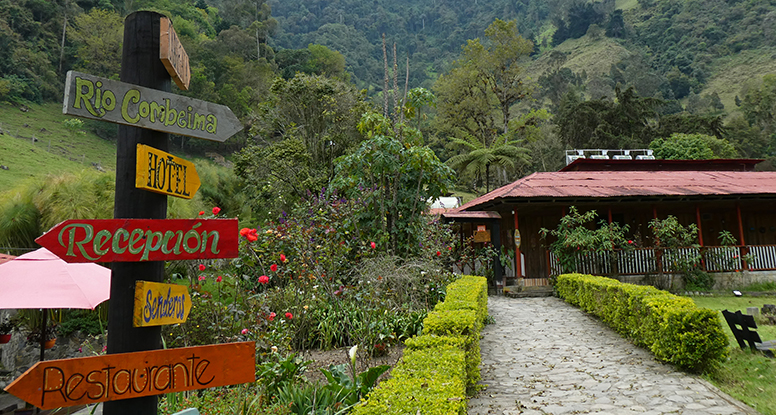
If you stay on the main road, you will soon reach Mirador Los Sauces, which is worth checking out since it offers very nice views of the canyon. The best sights are found further north, though. You can try to hitch a ride because there are always visitors at the viewpoint, but even if you have to walk the 4-kilometre distance, you won’t regret it. Amazingly, there is a gondola lift ready to take you to La Rivera.

Yes, someone really had the brilliant idea of building facilities for tourists on the other side of the canyon! The cable car looks a bit scary from the outside, but the 5-minute ride is actually quite comfortable. La Rivera is located in a brillant spot and you can even see Nevado del Tolima when the sky is clear. There are various activities that you can do there; I particularly liked the greenhouses with carnivorous plants. Just don’t forget to pack a jacket because it can get rainy and chilly in the mountains.

A carnivorous plant, La Rivera, Cañón del Combeima

If you have some spare time, consider adding Ibagué to your travel itinerary. A bus ride from Bogotá usually takes 4 hours, unless you get stuck in a traffic jam in the capital during peak hours. Lesser-known cities may not be among the most popular places to visit in Colombia, but they can offer nice opportunities for interesting trips. Cañón del Combeima is a great example of that because it’s a pretty impressive destination that is definitely worth exploring.

Six ELT blogs worth following

Being a teacher in the 21st century is great, isn’t it? We have access to a plethora of resources, so it’s quite easy to learn something new from the comfort of our home. I love reading blogs because it’s a great way of finding out what other ELT professionals think and do. I am always happy to see a new post notification, so I thought it would be a good idea to recommend my favourite bloggers.

I follow quite a lot of blogs through WordPress Reader, so having to choose just a few was rather tricky. I decided to select only those that have been running for at least a year. There are some excellent dormant blogs with very useful content that I may write about in the future, but now I am going to focus only on the active ones. They are listed in alphabetical order.

Six ELT blogs worth following

Adaptive Learning in ELT
This brilliant blog, which has been running for 7 years, always makes me think. Philip Kerr is very diligent in dealing with various ELT-related topics in his essays. Fake news and critical thinking in ELT is a great example of the type of posts you can read on the blog.

The author is sceptical of anything that isn’t supported by evidence, and I appreciate the fact that he doesn’t hold back his opinions. He seems to have a great sense of humour as well. This post on instructional grammar videos is full of hilarious comments and it really cheered me up when I was stuck at home during the pandemic.

ELT Planning
Pete is an experienced teacher and a prolific blogger. There always seem to be new posts on his website! You can find tons of lesson ideas, posts on CPD, reviews and much more on the blog.

In addition, Pete is involved in materials writing, and his blog provides valuable insight into the world of coursebooks and the process of their production. He summarises his views on that in The benefits of using an ELT coursebook. Pete’s posts are really witty and he doesn’t take himself too seriously, which is always nice to see.

Sam Shepherd
This blog’s author teaches English in the UK, so it’s really interesting to read about his work in that teaching context. Sam Shepherd is another blogger who doesn’t mince his words, and that leads to thought-provoking posts. Moving on up? deals with career progression and makes for a very interesting read.

Sam also makes some great points in his post A bunch of lies that focuses on online personas. He says that blogs are a tool of self-promotion and you can never be sure if what you read on them is true. Well, I have no idea what Sam is like in real life, but I certainly enjoy his posts.

Sandy Millin
I assume most of my readers have already come across this blog because there is so much amazing content on it. Sandy Millin has been regularly updating her website for more than 10 years, which is just incredible. There is a lot of useful Delta-related information, including conversations with those who have obtained the diploma.

It’s amazing to read some of Sandy’s older posts and see what she has achieved throughout the years. I find her articles on CELTA tutoring and being a Director of Studies particularly insightful. This is such an inspirational blog!

Sponge ELT
There are several reasons why I enjoy reading Sponge ELT. Jim Fuller is an academic manager whose posts on this topic show what being a director in a language academy entails.

The author is also a prolific reviewer of ELT literature, so if you are looking for some thought-provoking books to read, you should definitely visit his blog. In addition, Jim’s interviews of experienced professionals in his Sponge Chats inspire teachers to develop professionally and pursue a long-term career in ELT.

The TEFL Zone
If you are looking for new ideas for your teaching practice, I recommend that you follow The TEFL Zone. Rachel Tsateri shares lesson plans and downloadable worksheets that you can use in your own classes.

The Delta section of Rachel’s blog is a treasure trove for those interested in obtaining the diploma because it contains examples of successful assignments. There are also posts like Improving the quality of my teacher talk, which are very useful for developing teachers.

► If you enjoyed this blog post, I recommend that you read More Than a Gap Year Adventure, a collaborative book aimed at those who wish to have a long-term career in our profession.