A few tips for visiting La Guajira

The northernmost region of mainland Colombia is visited by more and more tourists every year. You can find a lot of useful information online, so there’s no need for me to mention the most popular places to go to. This blog post aims to provide some practical recommendations based on my trip to La Guajira that I took two months ago.

A few tips for visiting La Guajira

Spend some time in Riohacha
Most tourists start their trip to La Guajira in Santa Marta, Barranquilla, or even Cartagena. Riohacha is often seen just as a transit city, which I think is a bit unfair. The department’s capital has a pleasant vibe and I really enjoyed my time in it. I recommend spending a night there so you can see a beautiful sunset from the promenade. This is a nice opportunity to visit a coastal city that isn’t that popular with foreign tourists. There are direct flights to Riohacha from Bogotá, Medellín, and Cali, which makes it easy to reach.

It’s better to book a tour in person
A trip to La Guajira definitely isn’t cheap by Colombian standards, and if you search for tours on the internet, you will find some really expensive packages. There are plenty of agencies in big cities that can take you to Cabo de la Vela and beyond, and you will find lower prices when you go to the office in person. This is another advantage of going to Riohacha since you can find a better deal there compared to Santa Marta or Cartagena. I recommend that you shop around and visit more agencies, which will give you a chance to choose the operator that suits you best.

The coastal road provides a nice detour
Most visitors travel from Rioacha to Uribia using the main road and the Cuatro Vías intersection. However, that means missing out on some nice places to visit. The coastal road is less comfortable, but you can stop in Mayapo, which offers stunning sandy beaches. I also highly recommend visiting the saltworks of Manaure, where you can take an informative tour to find out more about the process of extracting salt from seawater. If you’re not in a rush, visiting these two places on the way to Uribia is a pretty good option.

A few tips for visiting La Guajira

Uribia can be a good starting point as well
The indigenous capital of Colombia doesn’t have any beautiful sights, but it’s the closest town to Cabo de la Vela with some amenities. Work Space Hostal is the only property in Uribia that can be found on booking.com at the moment, and I can confirm that it’s a good place to stay at. The main advantage of spending a night in the town is that you can leave for Cabo de la Vela early in the morning and beat the crowds, which is especially helpful when travelling during a popular vacation period.

It’s possible to explore La Guajira independently
If you don’t like using tour agencies, you can go to the most visited places on your own. Driving a car is an option, but that’s a bit risky since the farther you go, the worse the roads get. It’s also easy to get disoriented in the desert, so most people prefer to hire a local driver. Probably the cheapest option is to get a ride to Cabo de la Vela in a jeep from the intersection right outside Uribia, and then pay for a trip to places such as Pilón de Azúcar. It seems to be safe to do so, and adventurous travellers may choose to move around without being part of a guided tour. The main dangers to tourists come from the harsh environment, so don’t forget to pack appropriate clothes, a lot of water, and plenty of sunscreen!

A few tips for visiting La Guajira

Take a lot of cash with you
There are three Bancolombia ATMs in Uribia, but only one of them was working when I was there. I got lucky and managed to withdraw enough money for the trip to Cabo de la Vela because the following day all the ATMs were out of operation. It’s a good idea to get your cash in advance in one of the big cities.

Speaking of money, La Guajira isn’t the right place for negotiating and asking for discounts, which is common in some other parts of Colombia. Food in places like Cabo de la Vela and Punta Gallina is pricey by Colombian standards, but it’s important to look around and see how basic the infrastructure is. There are issues with water and electricity, and a lot of stuff has to be transported by land in difficult conditions, which explains why you need to pay more for some products and services.

Don’t expect a sanitised experience
La Guajira is quite clearly a beautiful place; seeing the desert meet the sea is something you won’t forget. However, you have to be ready for some less pleasant sights along the way. If you explore the region on Google Street View, you can easily find images like this one. Unfortunately, there is a huge problem with plastic waste in La Guajira due to an ineffective waste collection system and lack of education. It’s common to see the locals litter and pollute the area in which they live, which I think may turn into an environmental disaster in the near future.

You will also encounter children trying to stop cars and ask for money or food, which may be distressing for visitors. The locals I’ve talked to suggested that it’s one of those situations when doing what you think is a good deed may actually exacerbate the problem.

The overall feeling in La Guajira seems to be that the region receives very little attention from the government. In addition, the department is beset by rampant corruption and incompetence. For example, a new bus terminal was opened in Uribia in 2015. For some bizarre reasons, it has never been used by actual buses and the intersection just a couple of hundred metres up the road continues to serve as the main transport hub.

I’d say that La Guajira is a good example of challenges that developing countries often face. Having beautiful landscapes is obviously a great thing, but there are still plenty of issues affecting the local population that need to be resolved.
How to hike to Cascada Ipachanaque

One of the things I like about living in Colombia is that it’s a country full of waterfalls. Many cities are located close to the mountains, so there are plenty of opportunities for hiking. The TEFL in Colombia blog isn’t primarily a travel website, but I like sharing tips for places that are a little bit off the beaten path. I’m not a big fan of overpriced tours, so I prefer to recommend locations that are accessible by public transport. If you are looking for some lesser-known places to visit in Antioquia, you may find this article relevant.

How to hike to Cascada Ipachanaque from Barbosa

Medellín is a prime tourist destination with a lot of activities to do. If you want to do something else and escape the busy city, you can hike to Chorro de las Campanas, which I have written about before. Many visitors also travel to towns such as Guatapé, Jardín, Jericó or Santa Fe de Antioquia. You can find a lot of information about those places online, so I’d like to focus on a town that doesn’t receive many foreign tourists.

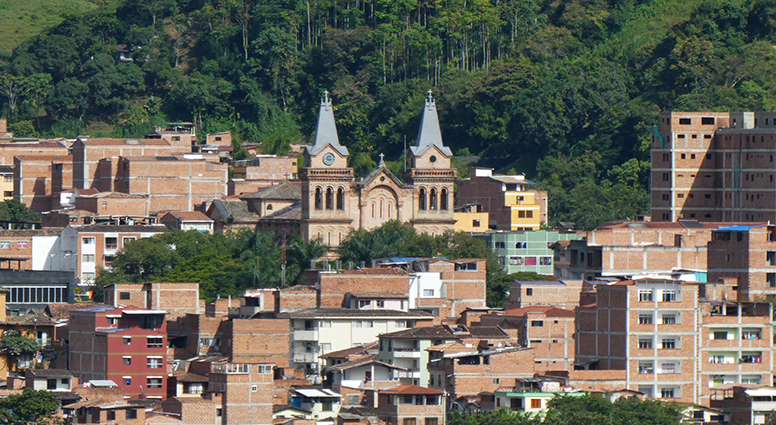
Barbosa, which is located approximately 40 kilometres north-east of Medellín, doesn’t feature on many people’s travel lists. There is nothing wrong with the town, but it isn’t as colourful as Guatapé, so it’s visited mainly by locals from Medellín. Barbosa sits in a valley, and that’s usually a sign of potential good locations for hiking in the nearby mountains. The retro-looking Places of interest section of the town’s official website suggests that it’s true, so I decided to give it a visit.

Getting to Barbosa is relatively easy. You just need to take the metro to Niquía and take a bus from there. The station is quite small and finding the right spot is easy. However, the bus to Barbosa stops at Parque de las Aguas, which is a popular weekend spot, so if you want to avoid long queues, it’s better to travel early in the morning or go on a weekday. You can also use your Cívica card on the bus.

There is no shortage of options when it comes to waterfalls near Barbosa. I chose Ipachanaque because getting there isn’t that straightforward, which means fewer visitors. In fact, I believe that it is necessary to use this expertly-labelled map to demonstrate what I mean:

How to hike to Cascada Ipachanaque from Barbosa

The bus left me near the main square (green star); the starting point of the hike is on the road called Vereda Buga (blue star). The most logical route would be to take Calle 13 and cross the bridge. Unfortunately, I didn’t manage to reach the bridge because the road was completely blocked off due to construction work. It looks like the same thing happened to the person who uploaded this Wikiloc trail in June 2020, so it’s not clear if taking Calle 13 will even be possible in the future. If you encounter this obstacle, there are two main options available to you:

  1. Get a taxi to the starting point of the hike.
  2. Take Carrera 22 and then walk on the hard shoulder of the motorway until you reach the starting point of the hike.

Long-time readers of this blog will probably find it easy to guess which option I chose. Let’s just say that cars driving on that stretch of Ruta Nacional 62 reach very impressive speeds.

How to hike to Cascada Ipachanaque

Vereda Buga is a one-lane road that looks fine at the beginning, but the higher you go, the worse it gets. Taxi drivers will most likely refuse to drive you up this road because a four-wheel drive is needed to avoid damaging the car. Many people use mototaxis to get to the fincas over there, so if you do this hike, you shouldn’t use headphones to listen to music because you’ll need to let the fast-moving motorcycles pass. You’ll eventually reach a stream and it may be necessary to use a footbridge to cross it if the water level is high.

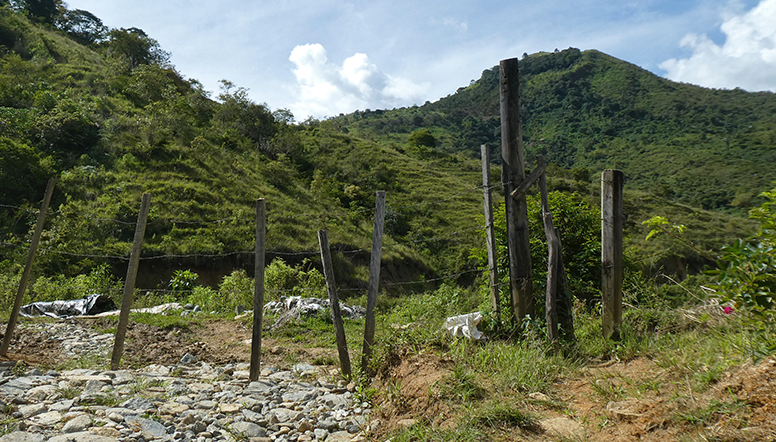
If you walk fast, the hike to the waterfall can be done in an hour. The elevation gain is 500 metres, which isn’t that bad, but it may get a bit tiring on a hot day, so make sure to drink a lot of water. Along the way you will probably see a lot of cows and horses, and there are also some impressive rocks, including one with ancient petroglyphs that are sadly not really visible anymore. You can simply follow Google Maps or the Wikiloc trail linked above; I suggest going through this gate to get to the waterfall from below because it’s faster that way:

How to hike to Cascada Ipachanaque

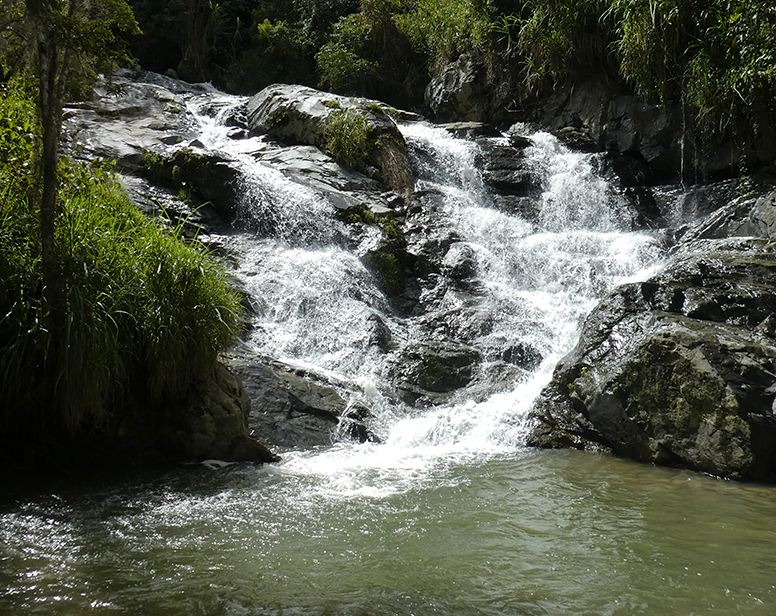
The path is used by horses and gets very muddy when it rains, so wearing proper hiking boots helps a lot in the final stage of the hike. Ipachanaque doesn’t rank among the most impressive waterfalls in Colombia, but I think it’s definitely worth visiting. You can jump into the pool below it and enjoy the refreshingly cold water. Thanks to the fact that the waterfall isn’t exactly easy to reach, you may not even meet anyone else there, so this is a pretty cool opportunity to get away from the crowds.

How to hike to Cascada Ipachanaque

The hike itself isn’t that long and you can return to Barbosa relatively quickly with some spare time to explore the town. Just remember that it’s a good idea to call a taxi to pick you up where Vereda Buga meets the motorway. Buses to Medellín leave from the corner of Calle 11 and Carrera 20; some of them will leave you in Niquía and others go to the centre, so ask the driver and choose the most convenient bus for you. There are also a few hotels in Barbosa in case you wish to stay a bit longer and visit other places in or around the town.

Would I recommend Barbosa to tourists planning to spend just a couple of weeks in Colombia? Probably not. I think this trip is a pretty good option mainly for those who have already been to most of the popular places in Antioquia and would like to visit a new location with some really nice hiking opportunities.