Lee Mackenzie: Nothing prepares you for telling teachers they have failed a lesson

I had the pleasure of interviewing an experienced ELT professional based in Colombia. We talked about a variety of topics that may interest developing teachers who are thinking of getting advanced qualifications. I hope you enjoy it!

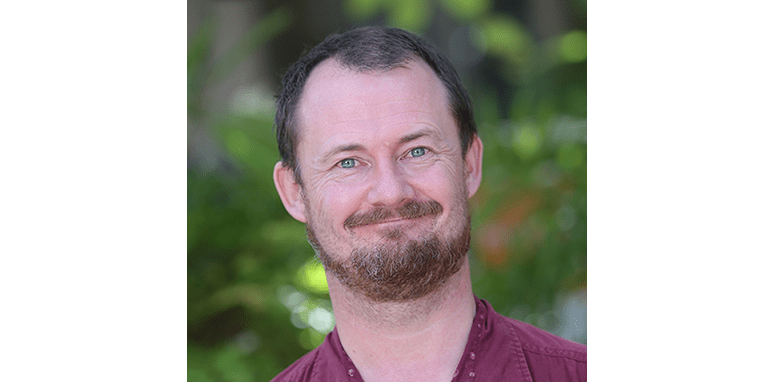
Lee Mackenzie is a teacher, teacher trainer, and researcher from the UK. After obtaining a Bachelor’s degree in English in 2004, he spent several years working in Europe. Lee completed his DELTA in 2010 and became a CELTA tutor two years later. He was responsible for running the first CELTA course at IH Lima in 2015. Lee then moved to Colombia, and he has been working as a lecturer and researcher at Universidad del Norte in Barranquilla since July 2017. In addition to a Master’s degree in TESOL, he also holds a PhD in Education.
Lee Mackenzie: Nothing prepares you for telling teachers they have failed a lesson

Let’s begin with a question about Barranquilla. How do you cope with the hot and humid weather in the city?

Two words: air conditioning. It’s necessary to have it on even at night!

You spent a year working in Lima. Are there any similarities between the ELT markets in Colombia and Peru?

I’d say the discourse of associating English with the West and importing ‘better’ methodologies from those countries. There are also issues in teacher education and the tendency to talk in the classroom like you are on a stage. Students often don’t get many opportunities to speak, and the learning that they have comes from private tuition or private education because there aren’t a lot of resources in the public sector. It doesn’t seem to be a priority for a lot of governments in the region, so it’s not a surprise that the levels of English are low in both countries.

I started my teaching career in Colombia through one of the volunteer programmes supported by the government. Do you think that this strategy is effective?

I actually wrote a paper on the Colombian government’s bilingualism policies, in which I analysed the ways they lead to social injustices. Some of those programmes don’t require teaching qualifications, but the foreign teachers are paid the same salary as public school teachers, who have a lot more work to do. It’s strange to see foreigners being promoted over locals for jobs that the locals can do. I think that when you look at the education system as a whole, they should be using the resources they have in Colombia and empowering the local teachers.

You have been a CELTA tutor for nine years. Could you briefly explain how one can land this position?

I think it’s about being in the right place at the right time. First of all, you need to work for a centre running CELTA courses, and they need to be willing to train you up. There is a lot of hard work, which is often unpaid, and then you have to do three courses at the same centre. Of course, now it’s not easy to fly to other countries to deliver courses there because of the COVID-19 pandemic. I see CELTA tutoring as a niche in the private sector, but there are also other opportunities that are financially more interesting. For example, I’d recommend getting an MA and looking for work at universities.

The online CELTA is now a permanent option. What do you think of courses delivered fully online?

I think we are moving towards the hybrid model now. Some things work better face-to-face, but other ones can be done online, so I think the blended model of the CELTA would provide a good balance. You could do the teaching practice in person and other components such as the assignments online. It’s true that the face-to-face CELTA doesn’t fully prepare you for teaching online, yet there are many things missing when teaching only online; for example, grouping students on Zoom and in the physical classroom is completely different.

Do you think that having only a CELTA is enough for teachers?

Think about other professions that allow you to take a four-week course and start working full-time; it usually doesn’t happen. The CELTA just gives people an idea of what they are doing. Some candidates struggle with the course because it’s really intensive, so it can put you through your paces if you aren’t academically minded. An interesting fact is that most CELTA holders leave the profession within two years. Those who stay in ELT typically do the DELTA or specialise in an area. There is so much to learn about English and how to teach it, and you can’t cover many different strategies and methodologies in a one-month course.

What was your DELTA experience like?

I did my DELTA at IH Barcelona, where Scott Thornbury used to work. I was lucky to be trained by Neil Forrest, who is an excellent tutor. During my eight-week Module Two course, I felt like a footballer who has to perform at their best every single match. I think it’s really difficult to sustain that level of performance in a stressful environment, and as a perfectionist I was disappointed when I taught a terrible lesson. I got through it in the end thanks to my tutors’ support, and the DELTA helped me get my Master’s faster thanks to credit exemptions. Sadly, IH Barcelona closed last year. It does feel like the end of an era when big schools like that disappear.

Did the DELTA prepare you for your role as a teacher trainer?

I think there is a gap there. When you come off the DELTA, you’re not prepared to give feedback to people who have just taught their first lesson in English. You sometimes have to tell someone that they have failed their lesson, which can make you feel terrible. I don’t think anything prepares you for that, so you have to learn through experience. The best thing to do is to make candidates understand what went wrong and why they didn’t meet the criteria, but some of them aren’t open to accepting negative feedback.

Congratulations for completing your PhD! Do you believe that it’s worth pursuing a doctoral degree?

I know this sounds like a cliché, but it has made me a better person. I think that’s the most important reason for anybody to study anything. I don’t take things for granted and now I look at them from a more critical perspective. In my thesis, I focused on how education can promote social justice as well as injustice. When it comes to job prospects, a PhD itself isn’t enough because you also need to be publishing. If you want to work in a university, a PhD is obviously a big help. You can also benefit from it financially, which is another point to consider.

I really liked your interview with Marek Kiczkowiak on native speakerism and discrimination in ELT job ads. As someone who has been researching this area, do you see any positive signs when it comes to these issues?

I recommend looking up Robert Phillipson’s work on language ideologies. He says there are five fallacies in ELT, and native speakerism is one of them. It’s important that people like Marek speak about the issue because not everyone is aware of these ideologies. We just have to keep pushing and challenging in very gentle ways. In my paper on job advertisements in Colombia, I looked at posts on Facebook. What I recommend is reporting those ads that are discriminatory. Even as a teacher, you can ask your students what they mean when they refer to native English speakers. I think there are some encouraging signs. Nobody was talking about the issue twenty years ago, so the fact that many people are speaking out against native speakerism shows that things are changing.

► If you enjoyed this interview, I recommend that you read More Than a Gap Year Adventure, a collaborative book aimed at those who wish to have a long-term career in our profession.

Jennifer Soto: We need to adapt to this new reality

The idea to conduct interviews for this blog represents a nice opportunity to get in touch with professionals involved in different educational contexts. Today’s interviewee is a Delta-qualified teacher and entrepreneur who decided to set up a company that provides its services fully online. I hope you enjoy the interview as much as I did!

Jennifer Soto started her teaching career in 2011 at Universidad Central de Venezuela, where she obtained her Bachelor’s degree in Modern Languages. After completing her CELTA in 2015, Jennifer began working for the British Council in Caracas. In 2018, she was promoted to the role of Academic Coordinator and obtained her Delta. She then moved to Colombia, where she co-founded Xemant.com in January 2020. In addition to online classes, this Medellín-based company provides translation, content writing, proofreading and editing services. Jennifer currently lives in Canada.

Jennifer Soto, Xemant.com

Most teachers got involved in online teaching only because of the pandemic. You co-founded Xemant.com in January, so I assume that you decided to make the switch to online classes by choice. What prompted you to do that?

I’ve always wanted to create something of my own in the typical ‘I want to be my own boss’ way. However, I wouldn’t use the word ‘choice’ to describe my circumstances. When I relocated to Colombia with my husband, we knew that we would be moving again relatively soon, which meant I couldn’t commit to working with any company. I started teaching private classes thanks to my colleagues’ recommendation and soon realized that it was the perfect moment to create a website and develop the idea of offering different language services online, working with other language professionals and giving people solutions for their language needs.

What does a typical class with your company look like? What methods and resources do you use?

I learned a lot in the British Council and many of the ideas are applied in our classes. We use the communicative approach and a typical class will start with the teacher and the student discussing a topic to break the ice and start showing what the focus of the class will be. After that, they will read, watch or listen to something that will be the framework for the rest of the classwork. The student will focus on the main aim of the lesson and then do speaking or writing activities in which they can use what they’ve learned so that they can internalize the information.

Our students will always have the opportunity to practice and communicate in the language they’re learning. Teachers are not the ones speaking the whole class like in a lecture; they interact with students, ask questions, play games, etc. Students will be working, analyzing, and using the language instead of just sitting in front of their computer receiving information.

We use some coursebooks as guidance, but we also like to utilize authentic materials like movies, songs, news articles, etc. This gives students a variety of sources to work with and shows them real examples of the language. Students sometimes suggest topics or materials and we adapt our lessons to include their ideas. We try to personalize our courses as much as possible and students are completely involved in their learning process.

You deliver your classes via Zoom. Why did you choose it? Have you tried any other tools?

We were already familiar with the platform, which has many useful features for online lessons like having breakout rooms for activities in pairs or small groups. Zoom makes it easier for teachers to plan more dynamic activities. It is definitely user-friendly, so it was easy to adopt even for those who hadn’t used Zoom before. That said, we are thinking of working with Microsoft Education to give our learners a more complete and better experience with a combination of programs. It would allow us to use Teams to teach our lessons, upload our material and students’ production to the cloud and have live chats with other students and teachers.

Jennifer Soto, Xemant.com

Let me ask you about something that most teachers in Colombia have had to deal with. Do you think that students can get the most out of online classes if they don’t have access to a PC and have to use their phone?

The experience certainly won’t be the same, so the teacher needs to adapt their lesson or give those students alternatives. Writing on the teacher’s screen might be too complicated for phone users, so the teacher can ask them to write their answers in the chat box. If there’s a reading activity, the teacher can send the text in advance so that the student can print it or have it on their phone, and so on. Although using a phone is not ideal, it can be done, and students can actually improve as much as if they were working on their computers. Of course, it will depend on how motivated they are and how much support their teacher gives them.

I have a colleague who teaches Math through WhatsApp in Brazil, and if he can do that, then I can teach languages! Seriously, we are lucky that we can do so many things with our phones. We actually have a WhatsApp group where our teachers and students share links, videos, quizzes and even memes to practice English outside the class.

Most of us switched to online classes practically overnight, so it took us some time to get used to the new situation. What would you recommend to teachers who are new to this?

To switch to online learning as well. I wasn’t that new to online teaching, but my experience was mainly in the face-to-face environment, so when we decided to found Xemant.com, I started enrolling in online courses myself to learn how to utilize some methodologies or tasks. I took the Teaching English Online course by Cambridge Assessment English, watched tutorials on how to use the platforms, used one new feature each class and, little by little, it became natural, and I’m still discovering new interesting things to make my lessons more dynamic and enjoyable. There are plenty of resources that will help you a lot. The good thing about the pandemic is that we are learning and adapting, and I don’t think that’s something negative. Sometimes, if not forced to do something, we never actually do it.

That’s really good advice. By the way, I noticed that you started making YouTube videos. I really liked the one about Venezuelan words that come from English. I hear those words all the time, but I hadn’t realised they were taken from English until I saw your video! What plans do you have with your YouTube channel? I imagine that coming up with new ideas for videos can’t be easy.

I’m glad you liked it and I hope you also like the other videos me, my partner, and our students have made. That video in particular was my first one ever; I wanted to do it about something that amazed me and thought that others might feel the same way. We sometimes take languages for granted and simply use words because it’s natural, but when you dig deeper, you end up discovering amazing facts and learning that your language is in fact a combination of languages.

Our plan with the YouTube channel is to keep making videos that teach, motivate and entertain our viewers, who are not only English learners. It’s definitely a challenge to come up with ideas that can be of interest as it seems everything has been done already, but I think we are focusing on producing content that can be useful. We recently collaborated with English teachers around the world to make a video about accents, and I loved the experience, so I hope we can continue doing things like that to motivate others.

I completely agree with what you said in the video. Speaking of Venezuela, the country’s own crisis has been exacerbated by the pandemic. I imagine this must have affected primary and secondary education in a terrible way. What about ELT? Is there now any market to speak of?

I still have family there, so I’m aware of the situation and it has definitely worsened their education system. I know there are many teachers making a lot of effort and sending assignments by e-mail and working with WhatsApp. When it comes to online classes, I doubt that’s an option for many as the internet service is too unstable and there are many blackouts.

Regarding ELT, there’s definitely a market precisely because of the crisis as many want to have opportunities abroad or work remotely for international companies and they need English for that. I know most English institutes are offering online lessons, but again, the internet and electricity are still an issue.

You have experience with teaching Italian and Spanish. How does that compare to teaching English? I am particularly interested in Spanish, which is your mother tongue. I can’t even imagine myself teaching my native language; I think I would fail miserably if I tried to do that.

I used to think the same, but I do my research and prepare my lessons just as I do for my English and Italian lessons. Yes, I’m a native speaker, but that alone doesn’t make me a qualified Spanish teacher. I take what I learned from my CELTA and Delta and apply it to my lessons based on research of the different aspects of the language. This is very important for me as a native Spanish speaker because I may sometimes consider some things obvious, or I may forget my students don’t know the nuances as well as I do and it may be difficult for me to understand why they’re having certain issues with the language. So I try to see myself as a Spanish learner as well and try not to forget the learning process, and I definitely apply knowledge from English to my Spanish lessons.

Could you talk a little about your experience with obtaining your CELTA and Delta? Where did you take the courses and what was it like?

I took both courses in the British Council in Caracas. I would say they were both the most challenging yet rewarding experiences in my career. The CELTA was a face-to-face course that took one month; it was really intense and I ended up not wanting to speak or hear English at home! It changed all I knew about teaching because my tutors showed me techniques and resources that I had never thought existed, and I realized there that teaching is a collaborative job and that the most important individual in a lesson is the student. That should be obvious, but the course helped me to teach with that in mind.

I chose the distance option for my Delta, so it was done online except for the in-class teaching practice. It was a whole new experience that required a lot more discipline and organization since you don’t have a set schedule, so you need to have excellent time-management skills. I was teaching, working as a coordinator and doing the Delta at the same time, so it definitely meant investing a lot of my free time.

While CELTA gave me great tools to teach, taking the Delta was what made me a real teacher. Getting to know the learning process more in depth, understanding students’ different needs, strengths and weaknesses, analyzing why we do certain things in certain ways or learning how to change some activities based on your specific group, all of that was extremely useful. I love learning and I could write a book about all the things I learned from the Delta, but I will just say that it changed my life as a teacher.

What do you think of the fact that those qualifications can be now done 100% online?

I find it amazing. It means more teachers from other parts of the world now have the possibility to take the courses, interact with colleagues from around the world and get to know the different teaching realities. The pandemic has already changed the way we teach, and if we don’t adapt to this new reality, we’ll end up being left behind. I’m sure tutors are adapting the materials and sessions for the online environment as it’s obviously a different experience in many areas. I think we should embrace it and take advantage of it because we will still be able to apply many of the things learned in an online CELTA to our face-to-face lessons.

► If you enjoyed this interview, I recommend that you read More Than a Gap Year Adventure, a collaborative book aimed at those who wish to have a long-term career in our profession.