
Welcome to a new section of the TEFL in Colombia blog! After receiving positive feedback on the first few articles, I decided to get a little more ambitious in terms of my posts. I plan to conduct a series of interviews with professionals involved in teaching English in Colombia. My intention is to talk to people from different parts of the country and cover a variety of teaching contexts. I have no idea if I will succeed, but I believe this idea is worth pursuing.
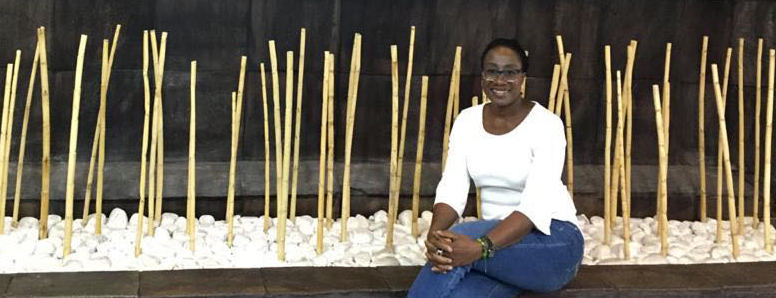
My first interviewee is Ndana Chibanda, a Zimbabwean-born English teacher. She obtained her Bachelor’s degree at the University of Botswana, majoring in Sociology and History. Her teaching career began in 2001 in Manizales. After spending three and a half years working for Centro Colombo Americano, she moved to South Africa to work in the healthcare industry. Ndana was involved in training staff members and designing learning materials. She then decided to get a teaching certificate from Global Language Training before accepting an offer to return to Colombia for a second stint with the same employer. She has been teaching English at Centro Colombo Americano Manizales since May 2016.
Let’s start with an obvious question. Why did you choose Colombia?
I decided to participate in the AIESEC exchange programme. They offered me three options: Egypt, Colombia, and India. When I was at university, I met a lot of Colombians. Then I travelled to Scotland and Switzerland for two of our international conferences and made so many friends there. They recommended Colombia to me, so I decided to choose it.
How did your family react? Colombia is now a fairly popular destination, but that definitely wasn’t the case in 2001.
They hoped I would choose one of the other two countries. I remember they told me to be careful, especially with my luggage, and they mentioned the usual stereotypical stuff that was common all those years ago. They were more open to my coming back in 2016, though.
Why did you return to Manizales? Most teachers look for a job in major cities like Bogotá or Medellín.
I spent 12 years living in Johannesburg, where life is very fast-paced, so I needed a change. I actually considered going to Panama, but I didn’t know anybody there. Besides, Centro Colombo Americano’s director contacted me on Facebook because they were short of native English speakers, so I decided to come back. It was an easy choice because I love the people from Manizales. It’s great how small the city is and that everything is in such close proximity. I also appreciate the sense of security that I feel here. The only thing that gets on my nerves a little bit are the constant rains. I am not saying that I will stay in Manizales forever, but I am happy where I am now.
What are the best places you have visited in Colombia?
I loved the weather in Ibagué. I am a summer baby, so the sun and I are best friends. Cartagena’s old city is beautiful. There are absolutely stunning beaches in Capurganá, which is a remote village close to Panama. I enjoyed the island life on San Andrés as well, but after five days the heat was just too much.
Let me ask you something about your daily life. I stick out like a sore thumb, so everybody knows I am a foreigner. How do strangers treat you?
Being Black African, I tend to blend in a lot. When I was in Capurganá, I blended in even more. Most people in Manizales think I am from the coast until I open my mouth and start speaking Spanish. My accent gives me away!
In my case, people aren’t surprised at all by my foreign accent when I speak Spanish. Speaking of that, do you think our students should aspire to speak English with a perfect “standard” accent?
I don’t think so. They should aspire to be understood. I believe people have accents for so many reasons, and that’s the beauty of learning a new language. Of course, if sounding like an American, British, Australian, South African or another native English speaker is their goal, then by all means they should go ahead and try to achieve it.
What are your long-term plans? Do you plan to stay in Colombia?
This is my fifth year on an employee visa, so I am going to apply for a resident visa next year. I am not sure what will happen, though. I had plans to visit my family in December, but Colombia is one of the countries that South Africa hasn’t opened to. I love Colombia, but not being able to see my family is tough.
I planned to go to Europe for Christmas, but that’s out of the question now. Let’s hope the situation improves and we will be able to see our families soon. By the way, you appeared in Reshaping Our Destinies, a short film dealing with the lockdown in Manizales. How did that come about?
The film was made by our theatre group at Centro Colombo Americano Manizales, which was created two years ago. I decided to join them at the beginning of this year and we started working on Reshaping our Destinies in June. There are some impressive indoor shots that were made using a cell phone. It was a really amazing experience and I am very happy to be involved with the group. We are currently working on a new project.
It’s great to hear the theatre group is active even though the institute’s doors are closed. It has been more than seven months since we last taught in a physical classroom. How do you feel about that?
To be honest, at first it was hard for all of us to adjust to having to teach from home. We were all navigating foreign waters in a sink-or-swim situation, but things have definitely gotten much better and I have been enjoying this ‘new normal’.
Do you think this long period of online classes will lead to changes in teaching English in Colombia?
It definitely has to. The future is uncertain because we don’t know how long we will have online classes. However, from my experience in Manizales, a lot of students prefer face-to-face classes, so there has to be a mental shift too. Also, we need to consider the rural areas and how much access to the internet they may or may not have.
Has the way English is taught in Colombia changed since your first stint in the early 2000s?
Oh, for sure! Back then, we didn’t use laptops in the classroom. We used just the hard copy books, blackboards, and tape recorders for listening exercises. We didn’t have the apps and online tools that we have today, so we had to be super creative in the way we taught. I am grateful for the advances in the teaching field, but I miss the calibre of students we had back then.
I think there is a fine line between a meaningful use of technology in the classroom and a gimmick that isn’t that helpful in terms of language learning. Playing with robots and electrical circuits is fun, but many of those activities can be done in silence or using only the mother tongue. What is the best way to utilise this hi-tech stuff in ELT?
That is a very difficult question. I totally agree that, at the end of the day, most people learning a language want to be able to communicate effectively; so hi-tech tools should be used to achieve this. However, in the same breath, things like the Maker movement have been gaining reactions and we have seen our students trying to communicate in English while doing these kinds of activities. There are many tech tools out there that do help students improve their English, and those are the ones we should be taking advantage of.
That’s a very good point. And finally, what advice would you give to those who are thinking of teaching English in Colombia once this pandemic is over?
To be honest, I would say be prepared to work a lot. ELT is a lot of fun, but a lot of long hours too. Also, I would say immerse yourself in Colombian culture and learn the language. You should most definitely travel around the country. Colombia is incredibly diverse with so much to see and do, so don’t miss out on it! Doing all this will definitely make your experience more enjoyable.
► If you enjoyed this interview, I recommend that you read More Than a Gap Year Adventure, a collaborative book aimed at those who wish to have a long-term career in our profession.

 TEFL in Colombia