
Valle de la Samaria: Colombia’s hidden gem

I am a big fan of Salento, the colourful town visited by scores of tourists every year. Many of them travel to the nearby Valle del Cocora, which is one of the most impressive places in Colombia thanks to its wax palms. You can find plenty of information about that online, so I am going to focus on something else today. If you have some spare time to explore the country, I would like to recommend a destination that is just as impressive, and it has the added bonus of not being crowded at all.

Valle de la Samaria is absolutely breathtaking. There are countless wax palms set in beautiful scenery and yet many Colombians have never heard of it. If you travel there, you will be one of few visitors; you may even get lucky and be there just by yourself.

The reason for Valle de la Samaria’s lack of popularity is very simple: it is not that easy to get there. The closest city is Manizales, which is not the most accessible location itself because its airport often gets closed in bad weather. Then you have to go to Salamina. A bus from Manizales takes three hours, or you can take a shared taxi, which is faster but more expensive. Both leave from Terminal de Manizales.

Another option is to take a bus from Medellín’s Terminal del Sur. There are two routes available (via La Merced or Aguadas) and both should take approximately five hours. The problem is that the closer you get to Salamina, the worse the road becomes. Travelling by bus on an unpaved winding road isn’t exactly a comfortable experience. The road becomes unsafe in bad weather conditions, and there have been some tragic accidents on the way to Salamina. I don’t think the town will have to deal with mass tourism in the foreseeable future.
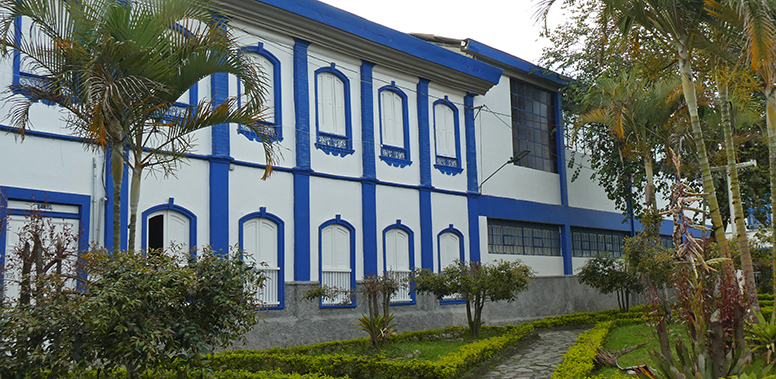
Salamina is a nice town with colourful houses. It is worth spending a night or two there so that you can enjoy its atmosphere and try some traditional dishes. There is a possibility of hiring a jeep to take you to the valley. Since I don’t like paying exorbitant prices, I opted for a bus. I recommend that you check the schedule at the small station on the corner of Calle 10 and Carrera 6. There were only two options when I was there: one bus early in the morning and the other in the afternoon. Don’t forget to ask about the return journey to avoid being stranded in San Félix, which is the closest village to Valle de la Samaria.

San Félix is a sleepy little place with a nice church and no amenities for tourists. If you arrive in the morning, you may find it almost completely deserted. There is a small grocery store at the corner of the main square where the path to the valley begins. The 6-kilometre walk is really pleasant. At first you pass bright green cow fields, and then beautiful hills covered with wax palms emerge.
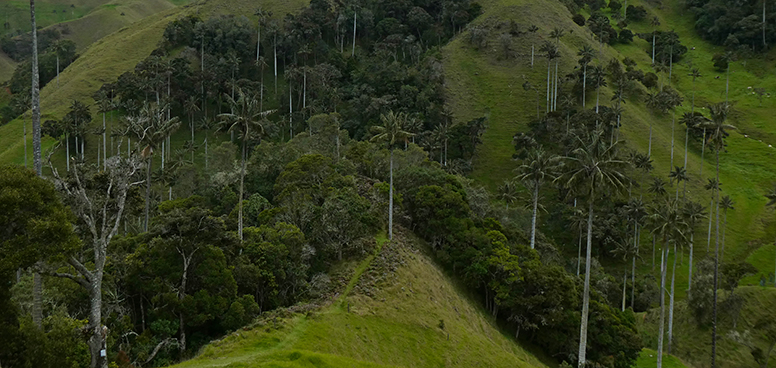
There is just one place that caters for tourists. Fortunately, it is a great one! Mirador is a mountain cottage, which is run by the Abril family with the idea of promoting sustainable ecotourism. The facilities were built from scratch only a couple of years ago, and I actually became the first visitor from the Czech Republic there. The owners are amazing people with big plans for the valley, and they are involved in planting new palm trees. You can go for a guided hike and enjoy delicious food afterwards. There are even rooms for guests in case you wish to stay overnight.

If you plan to visit Mirador, you should call them or get in touch through their Facebook page in advance to make sure that you can be attended. Don’t forget to take a jacket with you because the highest point is at almost 3,000 metres above sea level. It’s also very easy to get sunburnt at that altitude, so it is necessary to apply sunscreen!

There are a lot of beautiful places to visit in Colombia, but Valle de la Samaria stands out thanks to its serene atmosphere. It’s a perfect destination to escape the noise and pollution of major cities. Going there requires a bit of effort, but I highly recommend it to every nature lover. You can spend time in an amazing fairy-tale landscape and support a conservation project that is worthy of our attention.

How to apply for a TEFL job in Colombia

This blog post is aimed at newly-qualified teachers who are considering moving to Colombia in order to teach English. It focuses mainly on in-person jobs because many schools have returned to in-person education since the end of the COVID-19 pandemic. That said, some institutes keep focusing on online learning or provide blended courses, so it’s a good idea to be ready for both options.

Latin American countries are considered to be traditional when it comes to applying for jobs. Don’t expect to be hired from abroad. If you contact potential employers while being outside Colombia, they won’t get back to you in most cases. There are some exceptions, though. One is having an excellent academic profile with relevant qualifications and experience. The other is applying for a programme that is based on bringing foreigners to Colombia. Most people simply travel to Colombia as tourists and start looking for a job after their arrival. This is perfectly legal and the good news is that you don’t need to leave the country to get your employee visa.

Citizens of many countries don’t need a visa to travel to Colombia and can stay in the country for up to 90 days (and later ask for permission to stay in the country for extra 90 days). You can find a list of eligible countries here. Please note that when you travel to Colombia as a tourist, some airlines may ask you for proof of onward travel. You can book a refundable ticket and cancel it after arriving, or there are some online services that can help you overcome this issue.

When you finally make it to the country, you should get a Colombian phone number because nobody is going to call your foreign number. What is important to know is that when you use a Colombian SIM card in a phone imported from abroad, the mobile phone provider will probably ask you to register the phone. You might even have to produce a receipt to demonstrate that the phone is yours. This anti-theft policy is quite annoying, but you have to go through the process, otherwise your phone will be blocked.

When it comes to applying for a job, you may use websites like CompuTrabajo. However, most of the offers there aren’t great and the whole process takes a lot of time. The fastest way of getting an interview is simply dropping off your CV in person. Just look for schools, institutes and universities in the city and leave your CV there. If you are lucky, you may even get an interview immediately. I also recommend getting a nice photo taken for your CV. It may seem unimportant, but in some cases your appearance can improve your chances of landing a job, especially if you look like an obvious foreigner. It shouldn’t really be that way, but that is how it works with some employers.

As I mentioned before, you should be flexible in terms of locations. Putting your eggs in one basket may not be the best strategy. It could be a good idea to contact potential employers in various cities so that you can compare their offers and choose the best option.

The problem is that most places don’t believe that having a Work with Us section on their website could be beneficial. Sending your CV to emails like info@[schoolname] is completely futile and your message will most likely never be read. What you have to do is to get contact details of a relevant person. They are not called Director of Studies here, but their title is something like Academic Director, Academic Coordinator or Director of Language Department. You need to ask the potential employer to pass you the person’s details. If your Spanish isn’t good enough to make a phone call, try to contact the place through social media.

Once you have the person’s email, you can send them your CV that way. Apparently, sending cover letters is not a thing in Colombia. Most people just submit their CV and wait for a call. That seems like a missed opportunity to me, and I believe that adding a personal message can’t hurt. Try to indicate why you would be interested in working for that institution. If you have some references, you should attach them as well. I highly recommend mentioning that you will need visa assistance to set correct expectations. Someone might go through the hiring process with you and then tell you that they can’t help you obtain an employee visa, making the whole thing a colossal waste of time.

Don’t be disheartened if most people never respond to your email. Receiving a polite rejection message is not common and in many cases your application will simply be ignored. Applying in person or getting recommended by someone else is still preferred.

If you are a qualified teacher, you should receive some responses. You will probably be invited to teach a short demo lesson in addition to an interview. Many employers are worried that a foreign teacher may leave after a few months, so coming across as someone who is serious about the profession is a huge advantage. Being well-dressed definitely helps. Don’t be surprised if you get asked to undergo an intrusive psychological evaluation and a perfunctory medical exam (both completely in Spanish).

I would also recommend that you take your time and talk to more employers. Accepting the first offer that comes your way may not be the best decision you can make. It is always a good idea to have a backup plan. I will always remember the time I was offered a job at a private institute and everything looked fine. Well, instead of preparing all necessary documents for my visa application, the employer stopped communicating with me without any explanation. By the time they got back to me with the papers a month later, I had already found a better position.

Hiring in Colombia works in a slightly different way to other parts of the world, but if you are qualified, professional and persistent, there is no reason why you shouldn’t be able to find a job. If you’d like to receive personalised guidance, you are welcome to take advantage of my TEFL career advice service. You can also read More Than a Gap Year Adventure, a collaborative book aimed at those who wish to have a long-term career in our profession.