
Martin Higgins: The best institutions are in Bogotá

My next interviewee is a Delta-qualified teacher who moved into TEFL from another career. We talked about differences between private academies and universities, teaching other subjects, his own professional development journey, and other topics related to teaching English in Colombia.

Martin Higgins is an English teacher from the UK. He obtained a BA in International Studies in 2009 and an MSc in European Social Policy a year later. Before moving to Colombia, Martin was employed by Cambridge Assessment in various non-teaching roles. He also worked as a news reporter writing about Colombian politics. Martin started teaching English in Bogotá after taking a CELTA course in 2013, and he has been working at Universidad Externado de Colombia since January 2017. He successfully completed his Delta in 2020.
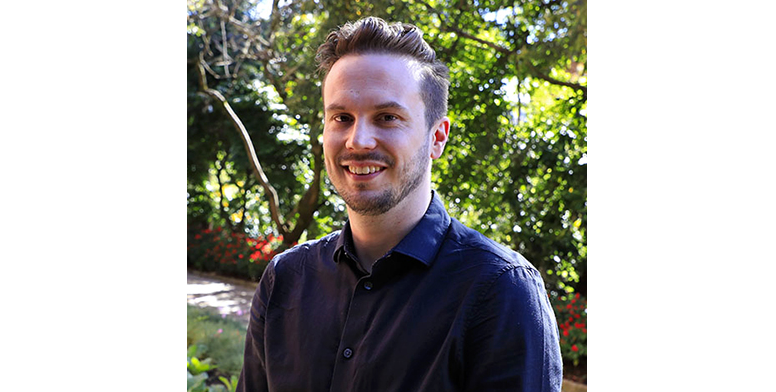
Martin Higgins: The best institutions are in Bogotá

Let’s start with your work before becoming a teacher. Could you briefly describe how you landed a job at Cambridge Assessment and what your responsibilities were?

I’m from Cambridge originally and had worked for Cambridge Assessment in various roles as a temp during the holidays when I was at university. When I graduated from university, jobs were pretty scarce due to the recession, and I wanted to work in politics, which turned out to be a very difficult sector to work in when you have no experience, no contacts, and no ability to work in unpaid internships for a couple of years.

By fortune, a vacancy came up in the Public Affairs department at Cambridge Assessment where I was temping at the time, and I got the role. At first I did the admin for the events team, but after 6 months I was promoted to the Unit Coordinator and got involved in more things related to my desired career path at the time. My boss was really good to me and supported me with my development, but in time I realised that working in politics wasn’t for me, so I decided to move to Colombia with my partner, who is from here, and to take up teaching.

In your role as a reporter, you dealt with topics such as illegal mining, same-sex marriage, and workers’ rights in Colombia. What was your experience like?

It wasn’t as interesting as it might sound. I was living in the UK at the time and wrote articles in the evenings for a mate who was running the Colombia Politics website. It was essentially churnalism, that is regurgitating news into English from other websites.

What prompted you to make a move into teaching?

Necessity, really. As I mentioned, I moved to Colombia with my partner and I didn’t speak any Spanish at the time, so this was the obvious career move. My father worked in EFL for many years and having worked for Cambridge Assessment, I was aware that the CELTA was the best way to start. After a few months working as a teacher, I realised that it was an enjoyable profession, and luckily I’ve been able to secure some decent roles here in Bogotá over the years.

You did your CELTA at International House Bogotá eight years ago. Looking back, did you feel ready for your first teaching job after taking the course?

I’m not sure anyone is ready after the CELTA, but you’ve got to start somewhere. I started off working with very small groups, so that was an easy way in before teaching large groups in my first university role.

What are the main differences between teaching at private academies and universities in Colombia?

The money and the hours. Working in private academies in Bogotá is pretty poorly paid, and the class times are usually first thing in the morning or in the evening. Not fun, but a rite of passage you have to go through I guess when you have no experience and cannot get a job at a university or bilingual school.

You have also taught subjects such as Diplomacy and International Relations Theory. How does that compare to teaching English?

It’s not entirely different. Most of what you learn in terms of lesson planning and classroom management can be transferred across to teaching other subjects. The key difference with teaching those courses was that I would have to spend a lot more time preparing for the classes by reading.

Have your degrees and experience in non-teaching jobs helped you in any way in your work as an English teacher?

Of course. Working at Cambridge Assessment certainly helped me organise my time better, which is an essential skill for teachers. Plus there are all the admin skills I developed that make life so much easier when you’re a teacher.

You spent four years working as an IELTS speaking examiner. Would you recommend this role to other teachers?

Absolutely. It gives you much more confidence in evaluating students’ level, and it’s a really good thing to have on the CV.

Some schools and universities in Colombia are finally returning to in-person education. How would you describe your experience working during the pandemic?

We are still teaching completely online. I can’t say I’ve particularly enjoyed teaching during the pandemic. Virtual teaching is something that can work, but only if the students choose it. The current situation has been imposed on our students and many of them don’t particularly enjoy it and would much prefer to be back in the classroom, as would I. Here’s hoping next year will see that possible.

Let’s hope so! It would be great to finally see the students in person. By the way, where did you do your Delta? Do you think that it has helped you in your teaching career?

I did it through Bell and their distance programme. I chose that school as I had worked there as a teacher before and I really like the institution. I was fortunate enough to find a really helpful tutor here in Colombia to assist me through Module Two, which was by far the most useful in my development as a teacher. After doing that, I really feel confident about entering any classroom in any environment and being able to teach a principled and interesting lesson.

I remember that you weren’t impressed by the structure of Module Three. If you could make some changes to this module, what would you do?

I would change the word count. It’s far too short and it hinders your ability to really explore the course design element properly, so you end up just trying to tick the boxes that the assessment criteria require, which leaves very little room for creativity.

Do you have any further plans for post-Delta development?

I would like to find some extra work in materials and course design in the long term, perhaps for a publisher. That’s a long term plan and will require more development, but I’m not sure if I’ll do any formal qualifications in the short term.

You have spent many years in Bogotá, so I imagine that you enjoy living there. Have you ever considered looking for a job in another city?

I’m very happy at the Externado and wouldn’t want to work anywhere else in Colombia – Bogotá is where my partner’s family live and the best institutions to work in are here. Who knows what the future holds, though.

► If you enjoyed this interview, I recommend that you read More Than a Gap Year Adventure, a collaborative book aimed at those who wish to have a long-term career in our profession.
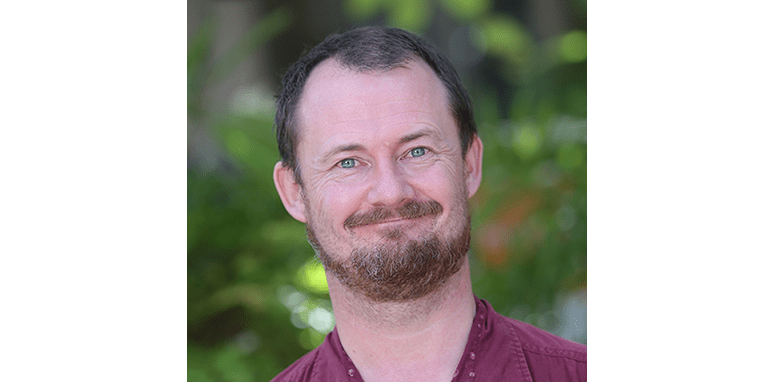
Lee Mackenzie: Nothing prepares you for telling teachers they have failed a lesson

I had the pleasure of interviewing an experienced ELT professional based in Colombia. We talked about a variety of topics that may interest developing teachers who are thinking of getting advanced qualifications. I hope you enjoy it!

Lee Mackenzie is a teacher, teacher trainer, and researcher from the UK. After obtaining a Bachelor’s degree in English in 2004, he spent several years working in Europe. Lee completed his DELTA in 2010 and became a CELTA tutor two years later. He was responsible for running the first CELTA course at IH Lima in 2015. Lee then moved to Colombia, and he has been working as a lecturer and researcher at Universidad del Norte in Barranquilla since July 2017. In addition to a Master’s degree in TESOL, he also holds a PhD in Education.

Lee Mackenzie: Nothing prepares you for telling teachers they have failed a lesson

Let’s begin with a question about Barranquilla. How do you cope with the hot and humid weather in the city?

Two words: air conditioning. It’s necessary to have it on even at night!

You spent a year working in Lima. Are there any similarities between the ELT markets in Colombia and Peru?

I’d say the discourse of associating English with the West and importing ‘better’ methodologies from those countries. There are also issues in teacher education and the tendency to talk in the classroom like you are on a stage. Students often don’t get many opportunities to speak, and the learning that they have comes from private tuition or private education because there aren’t a lot of resources in the public sector. It doesn’t seem to be a priority for a lot of governments in the region, so it’s not a surprise that the levels of English are low in both countries.

I started my teaching career in Colombia through one of the volunteer programmes supported by the government. Do you think that this strategy is effective?

I actually wrote a paper on the Colombian government’s bilingualism policies, in which I analysed the ways they lead to social injustices. Some of those programmes don’t require teaching qualifications, but the foreign teachers are paid the same salary as public school teachers, who have a lot more work to do. It’s strange to see foreigners being promoted over locals for jobs that the locals can do. I think that when you look at the education system as a whole, they should be using the resources they have in Colombia and empowering the local teachers.

You have been a CELTA tutor for nine years. Could you briefly explain how one can land this position?

I think it’s about being in the right place at the right time. First of all, you need to work for a centre running CELTA courses, and they need to be willing to train you up. There is a lot of hard work, which is often unpaid, and then you have to do three courses at the same centre. Of course, now it’s not easy to fly to other countries to deliver courses there because of the COVID-19 pandemic. I see CELTA tutoring as a niche in the private sector, but there are also other opportunities that are financially more interesting. For example, I’d recommend getting an MA and looking for work at universities.

The online CELTA is now a permanent option. What do you think of courses delivered fully online?

I think we are moving towards the hybrid model now. Some things work better face-to-face, but other ones can be done online, so I think the blended model of the CELTA would provide a good balance. You could do the teaching practice in person and other components such as the assignments online. It’s true that the face-to-face CELTA doesn’t fully prepare you for teaching online, yet there are many things missing when teaching only online; for example, grouping students on Zoom and in the physical classroom is completely different.

Do you think that having only a CELTA is enough for teachers?

Think about other professions that allow you to take a four-week course and start working full-time; it usually doesn’t happen. The CELTA just gives people an idea of what they are doing. Some candidates struggle with the course because it’s really intensive, so it can put you through your paces if you aren’t academically minded. An interesting fact is that most CELTA holders leave the profession within two years. Those who stay in ELT typically do the DELTA or specialise in an area. There is so much to learn about English and how to teach it, and you can’t cover many different strategies and methodologies in a one-month course.

What was your DELTA experience like?

I did my DELTA at IH Barcelona, where Scott Thornbury used to work. I was lucky to be trained by Neil Forrest, who is an excellent tutor. During my eight-week Module Two course, I felt like a footballer who has to perform at their best every single match. I think it’s really difficult to sustain that level of performance in a stressful environment, and as a perfectionist I was disappointed when I taught a terrible lesson. I got through it in the end thanks to my tutors’ support, and the DELTA helped me get my Master’s faster thanks to credit exemptions. Sadly, IH Barcelona closed last year. It does feel like the end of an era when big schools like that disappear.

Did the DELTA prepare you for your role as a teacher trainer?

I think there is a gap there. When you come off the DELTA, you’re not prepared to give feedback to people who have just taught their first lesson in English. You sometimes have to tell someone that they have failed their lesson, which can make you feel terrible. I don’t think anything prepares you for that, so you have to learn through experience. The best thing to do is to make candidates understand what went wrong and why they didn’t meet the criteria, but some of them aren’t open to accepting negative feedback.

Congratulations for completing your PhD! Do you believe that it’s worth pursuing a doctoral degree?

I know this sounds like a cliché, but it has made me a better person. I think that’s the most important reason for anybody to study anything. I don’t take things for granted and now I look at them from a more critical perspective. In my thesis, I focused on how education can promote social justice as well as injustice. When it comes to job prospects, a PhD itself isn’t enough because you also need to be publishing. If you want to work in a university, a PhD is obviously a big help. You can also benefit from it financially, which is another point to consider.

I really liked your interview with Marek Kiczkowiak on native speakerism and discrimination in ELT job ads. As someone who has been researching this area, do you see any positive signs when it comes to these issues?

I recommend looking up Robert Phillipson’s work on language ideologies. He says there are five fallacies in ELT, and native speakerism is one of them. It’s important that people like Marek speak about the issue because not everyone is aware of these ideologies. We just have to keep pushing and challenging in very gentle ways. In my paper on job advertisements in Colombia, I looked at posts on Facebook. What I recommend is reporting those ads that are discriminatory. Even as a teacher, you can ask your students what they mean when they refer to native English speakers. I think there are some encouraging signs. Nobody was talking about the issue twenty years ago, so the fact that many people are speaking out against native speakerism shows that things are changing.

► If you enjoyed this interview, I recommend that you read More Than a Gap Year Adventure, a collaborative book aimed at those who wish to have a long-term career in our profession.