Martin Higgins: The best institutions are in Bogotá

My next interviewee is a Delta-qualified teacher who moved into TEFL from another career. We talked about differences between private academies and universities, teaching other subjects, his own professional development journey, and other topics related to teaching English in Colombia.

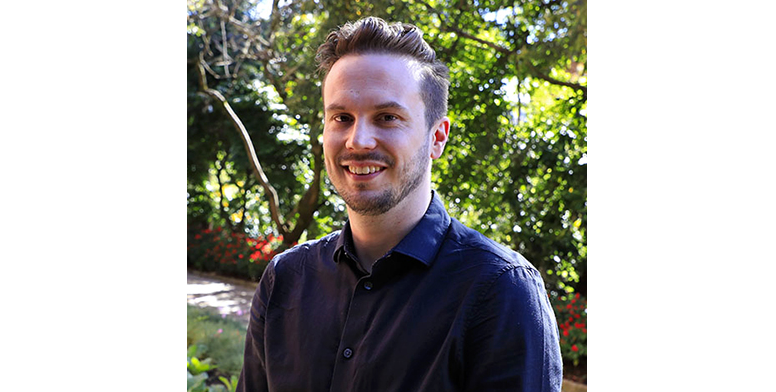
Martin Higgins is an English teacher from the UK. He obtained a BA in International Studies in 2009 and an MSc in European Social Policy a year later. Before moving to Colombia, Martin was employed by Cambridge Assessment in various non-teaching roles. He also worked as a news reporter writing about Colombian politics. Martin started teaching English in Bogotá after taking a CELTA course in 2013, and he has been working at Universidad Externado de Colombia since January 2017. He successfully completed his Delta in 2020.
Martin Higgins: The best institutions are in Bogotá

Let’s start with your work before becoming a teacher. Could you briefly describe how you landed a job at Cambridge Assessment and what your responsibilities were?

I’m from Cambridge originally and had worked for Cambridge Assessment in various roles as a temp during the holidays when I was at university. When I graduated from university, jobs were pretty scarce due to the recession, and I wanted to work in politics, which turned out to be a very difficult sector to work in when you have no experience, no contacts, and no ability to work in unpaid internships for a couple of years.

By fortune, a vacancy came up in the Public Affairs department at Cambridge Assessment where I was temping at the time, and I got the role. At first I did the admin for the events team, but after 6 months I was promoted to the Unit Coordinator and got involved in more things related to my desired career path at the time. My boss was really good to me and supported me with my development, but in time I realised that working in politics wasn’t for me, so I decided to move to Colombia with my partner, who is from here, and to take up teaching.

In your role as a reporter, you dealt with topics such as illegal mining, same-sex marriage, and workers’ rights in Colombia. What was your experience like?

It wasn’t as interesting as it might sound. I was living in the UK at the time and wrote articles in the evenings for a mate who was running the Colombia Politics website. It was essentially churnalism, that is regurgitating news into English from other websites.

What prompted you to make a move into teaching?

Necessity, really. As I mentioned, I moved to Colombia with my partner and I didn’t speak any Spanish at the time, so this was the obvious career move. My father worked in EFL for many years and having worked for Cambridge Assessment, I was aware that the CELTA was the best way to start. After a few months working as a teacher, I realised that it was an enjoyable profession, and luckily I’ve been able to secure some decent roles here in Bogotá over the years.

You did your CELTA at International House Bogotá eight years ago. Looking back, did you feel ready for your first teaching job after taking the course?

I’m not sure anyone is ready after the CELTA, but you’ve got to start somewhere. I started off working with very small groups, so that was an easy way in before teaching large groups in my first university role.

What are the main differences between teaching at private academies and universities in Colombia?

The money and the hours. Working in private academies in Bogotá is pretty poorly paid, and the class times are usually first thing in the morning or in the evening. Not fun, but a rite of passage you have to go through I guess when you have no experience and cannot get a job at a university or bilingual school.

You have also taught subjects such as Diplomacy and International Relations Theory. How does that compare to teaching English?

It’s not entirely different. Most of what you learn in terms of lesson planning and classroom management can be transferred across to teaching other subjects. The key difference with teaching those courses was that I would have to spend a lot more time preparing for the classes by reading.

Have your degrees and experience in non-teaching jobs helped you in any way in your work as an English teacher?

Of course. Working at Cambridge Assessment certainly helped me organise my time better, which is an essential skill for teachers. Plus there are all the admin skills I developed that make life so much easier when you’re a teacher.

You spent four years working as an IELTS speaking examiner. Would you recommend this role to other teachers?

Absolutely. It gives you much more confidence in evaluating students’ level, and it’s a really good thing to have on the CV.

Some schools and universities in Colombia are finally returning to in-person education. How would you describe your experience working during the pandemic?

We are still teaching completely online. I can’t say I’ve particularly enjoyed teaching during the pandemic. Virtual teaching is something that can work, but only if the students choose it. The current situation has been imposed on our students and many of them don’t particularly enjoy it and would much prefer to be back in the classroom, as would I. Here’s hoping next year will see that possible.

Let’s hope so! It would be great to finally see the students in person. By the way, where did you do your Delta? Do you think that it has helped you in your teaching career?

I did it through Bell and their distance programme. I chose that school as I had worked there as a teacher before and I really like the institution. I was fortunate enough to find a really helpful tutor here in Colombia to assist me through Module Two, which was by far the most useful in my development as a teacher. After doing that, I really feel confident about entering any classroom in any environment and being able to teach a principled and interesting lesson.

I remember that you weren’t impressed by the structure of Module Three. If you could make some changes to this module, what would you do?

I would change the word count. It’s far too short and it hinders your ability to really explore the course design element properly, so you end up just trying to tick the boxes that the assessment criteria require, which leaves very little room for creativity.

Do you have any further plans for post-Delta development?

I would like to find some extra work in materials and course design in the long term, perhaps for a publisher. That’s a long term plan and will require more development, but I’m not sure if I’ll do any formal qualifications in the short term.

You have spent many years in Bogotá, so I imagine that you enjoy living there. Have you ever considered looking for a job in another city?

I’m very happy at the Externado and wouldn’t want to work anywhere else in Colombia – Bogotá is where my partner’s family live and the best institutions to work in are here. Who knows what the future holds, though.

► If you enjoyed this interview, I recommend that you read More Than a Gap Year Adventure, a collaborative book aimed at those who wish to have a long-term career in our profession.
Tips for passing Delta Module Two

When I contacted IH Mexico at the beginning of 2020, I certainly didn’t expect that I would have to wait more than a year and a half to be able to call myself a Delta-qualified teacher. I had already passed Module One and submitted Module Three, and I was looking forward to completing the last module. The pandemic threw a spanner into the works, so I had to be very patient, but in the end I managed to obtain the full diploma. If you are considering tackling Delta Module Two, I would like to share a few recommendations based on my experience.

Tips for passing Delta Module Two

Choose a course that suits you
There are various wasy of doing this module, ranging from six-week courses to distance options that take nine months to complete. You need to be 100% sure that the selected course is right for you since Module Two will require a lot of effort from your side.

I decided to go with IH Mexico’s three-month online course because it allowed me to continue working. In the first half of the course, I was teaching 21 hours per week from Monday to Saturday, and it was really challenging to combine it with my Delta work. Reducing my workload to 16 hours per week helped me focus on the last two assessed lessons. Doing the module this way wasn’t easy because I didn’t have a single day off for the duration of the course. In fact, I kept waking up at night thinking of my lessons, which wasn’t pleasant at all. I still think it was a good decision to take a shorter course because I managed to complete everything I was supposed to do.

The online options are convenient since you can do the course from the comfort of your home, but it’s really important to choose the right provider. I didn’t have to worry about huge time differences with IH Mexico, and I was also given access to a lot of books and articles. It would have been impossible to pass the course without relevant resources, so I recommend that you double check this with your provider before you pay the course fee.

It’s also important to clarify who your learners will be during the course. I chose to work with students provided by IH Mexico because my own classes at work started at a later date and I usually teach shorter courses, so it made more sense to work with the same group for the whole three months. I’d recommend working with your own students if you have that option, though. When you have to rely on your tutors, teaching partners, volunteer students, and technology, many things can go wrong. There were some issues related to my TPs, and I felt that it made an already difficult course even more stressful. Let’s just say that doing this module online has its drawbacks.

Make sure you know what you have to do
This is something I found extremely useful. You simply don’t want to waste time trying to figure out what exactly is expected from you. It’s very important to know what terms like PDA, LSA, and EP mean and when you are supposed to submit the documents. I highly recommend that you read the Delta handbook for tutors and candidates and familiarise yourself with the module. You can find a condensed version of the handbook with some good advice in Damian Williams’ book How to Pass Delta. If you are very ambitious and perhaps you’d like to achieve a Distinction grade, there is a lot of detailed information about the module on ELT Concourse. Blogs are another helpful source of information: Jim Fuller, Sandy Millin, Rachel Tsateri, and Lizzie Pinard have incredibly valuable content on their websites.

I understand that you may feel overwhelmed by the amount of information. There are a lot of requirements, word counts, and abbreviations that you need to remember, but it’s worth spending extra time doing your research. Being familiar with the structure of the course will make everything a little easier for you.

Read relevant books before the course
If you have some extra time, try to read as many books as you can before you start the course because you probably won’t have enough opportunities to do that when you are working on your LSAs; your reading will need to be much more selective. I have already mentioned some important titles in my posts about CELTA and Delta Module One. In addition, I read the following books in preparation for Module Two:

● Michael Lewis: The English Verb
This mind-blowing book made me reconsider the way I teach grammar. You can read my blog post about it here.

● John Field: Listening in the Language Classroom
This one was a game changer for me when it comes to teaching skills. Field criticises the traditional comprehension approach and suggests that we shouldn’t just test what the learners already know. It’s necessary to go much deeper and help the students improve their ability to employ various processes involved in listening. In short, this book will help you move beyond the CELTA way of teaching skills. If you’d like to read a bit more about this book, check out this blog post of mine.

● David Nunan: Syllabus Design
During a Delta Module Two course, you are always expected to justify your choices. You also have to conduct a needs analysis at the beginning of the course. I don’t think this is a critical title for this module, but having some knowledge of syllabus design will help you with writing certain sections of your lesson plans.

● Scott Thornbury: Uncovering Grammar
Teaching grammar can be done in a more creative way than by following the tedious PPP lesson framework. Seeing grammar as a process instead of treating it as building blocks that need to be ‘covered’ can help you deliver more effective and engaging lessons.

● Michael Lewis: The Lexical Approach
I didn’t actually teach a lesson on lexis during the course, but this book is about more than that. Michael Lewis was a prominent critic of the ELT industry, and his ideas influenced the way I see my role as a teacher.

● Paul Nation: Teaching ESL/EFL Reading and Writing
I needed to learn more about teaching skills, so I decided to read a book that deals with two of them at the same time. Nation’s book contains practical ideas for your teaching practice.

● Scott Thornbury: How to Teach Speaking
You know what you get from the How to… books, which are a good starting point for exploring the given area. Every lesson involves some speaking activities, so I found this book helpful for all of my LSAs.

● Scott Thornbury: Big Questions in ELT
This isn’t an essential title for the course, but I really enjoyed reading it. Scott Thornbury selected 21 topics from his blog and compiled them into a digital book. He tackles questions that come up all the time and shares some thought-provoking ideas. You can buy the ebook on Smashwords.

● Mike Long: Second Language Acquisition and Task-Based Language Teaching
Module Two LSAs aren’t exactly the right place for TBLT, so I read this book for my own development rather than to pass the Delta. Among other things, there is a lot of useful information on second-language acquisition, which is something that influences our teaching practice. You can read my blog post about this brilliant book here

● Luke Meddings & Scott Thornbury: Teaching Unplugged
I knew that I would choose Dogme for my Experimental Practice, and reading this book helped me prepare for my first lesson in which I wasn’t in full control of the content. I also read a lot of articles and blog posts about the Dogme movement in preparation for the EP assignment.

I don’t think it’s necessary to read these exact titles because there are plenty of great books by other authors. The point is to focus on areas that you need to find out more about so that you are ready for the course.

Be organised
You will work with a lot of information during the course, so it’s very useful to know where to find it. I organised all my materials into specific folders on my PC so that I could get what I needed in a matter of seconds. You really don’t want to waste time trying to locate something important that you need for your assignment.

It’s also necessary to mention that you will have to do a lot of writing. Teaching actually takes up only a small portion of Module Two, and you will spend a lot of time working on various written assignments. I believe that I had to submit at least 17 documents, which meant thousands of words and long appendices. I created templates in Microsoft Word with key requirements and word number limits, which helped me save time because I didn’t need to keep checking the handbook all the time.

Choose a good strategy
You have to teach four assessed lessons during Delta Module Two. Two assignments need to be on a system (grammar, lexis, phonology, or discourse), one on a receptive skill (listening or reading), and one on a productive skill (speaking or writing). In theory, you are free to do them in any order. IH Mexico chose a different approach and asked our group of trainees to do a grammar-based lesson first because it’s considered to be a ‘safe’ option, and then we focused on a receptive skill in LSA2. I think this was a pretty smart decision because the lessons were tied to the input sessions, which meant that we received plenty of relevant information in preparation for the assignments.

Thanks to passing the first two LSAs, I was able to experiment a little in LSA3. I decided to focus on phonology, and even though it wasn’t the best lesson ever, I passed it as well. LSA4 is the most important assignment that you can’t afford to fail, so I chose writing because I think it’s one of my strongest areas. It definitely makes sense to leave something you feel confident about for the last lesson, and my LSA4 went really well because my final Module Two grade was a Pass with Merit. IH Mexico’s decision to restrict the candidates’ choices in the first two LSAs proved to be very beneficial in my case. Your provider may run the course in a different way, but you will still need to make important decisions about the areas you wish to teach.

Don’t take feedback personally
Receiving negative comments on a draft of your essay from your tutor can be disheartening. Being told that some ideas in your lesson plan make no sense isn’t easy to take. However, it’s important to bear in mind that Delta tutors aim to make you a better teacher. I found the post-lesson feedback sessions particularly valuable since it’s something that never takes place in my daily teaching practice. Of course, the tutors had to tell me that some of my lesson stages weren’t good, but that’s how it should be. If you wish to improve as a teacher, you have to address your weaknesses. Delta Module Two isn’t meant to be an enjoyable experience, and I definitely wouldn’t want to do the course again. Nevertheless, I am very happy that I decided to take this module because it pushed me to learn more about teaching, and now I feel much more confident in my abilities.

► If you enjoyed this blog post, I recommend that you read More Than a Gap Year Adventure, a collaborative book aimed at those who wish to have a long-term career in our profession.