
I had the pleasure of interviewing an experienced ELT professional based in Colombia. We talked about a variety of topics that may interest developing teachers who are thinking of getting advanced qualifications. I hope you enjoy it!
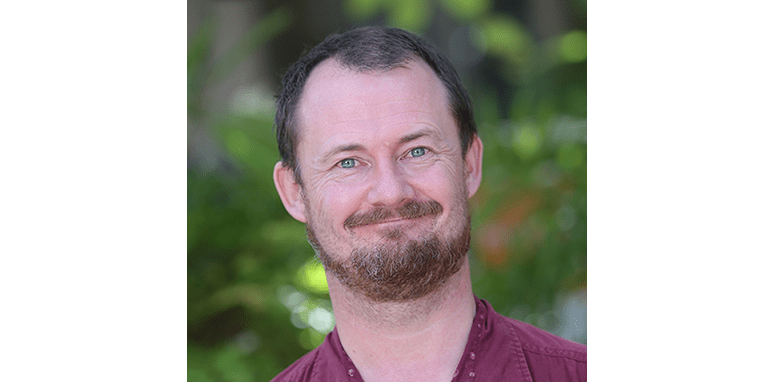
Lee Mackenzie is a teacher, teacher trainer, and researcher from the UK. After obtaining a Bachelor’s degree in English in 2004, he spent several years working in Europe. Lee completed his DELTA in 2010 and became a CELTA tutor two years later. He was responsible for running the first CELTA course at IH Lima in 2015. Lee then moved to Colombia, and he has been working as a lecturer and researcher at Universidad del Norte in Barranquilla since July 2017. In addition to a Master’s degree in TESOL, he also holds a PhD in Education.
Let’s begin with a question about Barranquilla. How do you cope with the hot and humid weather in the city?
Two words: air conditioning. It’s necessary to have it on even at night!
You spent a year working in Lima. Are there any similarities between the ELT markets in Colombia and Peru?
I’d say the discourse of associating English with the West and importing ‘better’ methodologies from those countries. There are also issues in teacher education and the tendency to talk in the classroom like you are on a stage. Students often don’t get many opportunities to speak, and the learning that they have comes from private tuition or private education because there aren’t a lot of resources in the public sector. It doesn’t seem to be a priority for a lot of governments in the region, so it’s not a surprise that the levels of English are low in both countries.
I started my teaching career in Colombia through one of the volunteer programmes supported by the government. Do you think that this strategy is effective?
I actually wrote a paper on the Colombian government’s bilingualism policies, in which I analysed the ways they lead to social injustices. Some of those programmes don’t require teaching qualifications, but the foreign teachers are paid the same salary as public school teachers, who have a lot more work to do. It’s strange to see foreigners being promoted over locals for jobs that the locals can do. I think that when you look at the education system as a whole, they should be using the resources they have in Colombia and empowering the local teachers.
You have been a CELTA tutor for nine years. Could you briefly explain how one can land this position?
I think it’s about being in the right place at the right time. First of all, you need to work for a centre running CELTA courses, and they need to be willing to train you up. There is a lot of hard work, which is often unpaid, and then you have to do three courses at the same centre. Of course, now it’s not easy to fly to other countries to deliver courses there because of the COVID-19 pandemic. I see CELTA tutoring as a niche in the private sector, but there are also other opportunities that are financially more interesting. For example, I’d recommend getting an MA and looking for work at universities.
The online CELTA is now a permanent option. What do you think of courses delivered fully online?
I think we are moving towards the hybrid model now. Some things work better face-to-face, but other ones can be done online, so I think the blended model of the CELTA would provide a good balance. You could do the teaching practice in person and other components such as the assignments online. It’s true that the face-to-face CELTA doesn’t fully prepare you for teaching online, yet there are many things missing when teaching only online; for example, grouping students on Zoom and in the physical classroom is completely different.
Do you think that having only a CELTA is enough for teachers?
Think about other professions that allow you to take a four-week course and start working full-time; it usually doesn’t happen. The CELTA just gives people an idea of what they are doing. Some candidates struggle with the course because it’s really intensive, so it can put you through your paces if you aren’t academically minded. An interesting fact is that most CELTA holders leave the profession within two years. Those who stay in ELT typically do the DELTA or specialise in an area. There is so much to learn about English and how to teach it, and you can’t cover many different strategies and methodologies in a one-month course.
What was your DELTA experience like?
I did my DELTA at IH Barcelona, where Scott Thornbury used to work. I was lucky to be trained by Neil Forrest, who is an excellent tutor. During my eight-week Module Two course, I felt like a footballer who has to perform at their best every single match. I think it’s really difficult to sustain that level of performance in a stressful environment, and as a perfectionist I was disappointed when I taught a terrible lesson. I got through it in the end thanks to my tutors’ support, and the DELTA helped me get my Master’s faster thanks to credit exemptions. Sadly, IH Barcelona closed last year. It does feel like the end of an era when big schools like that disappear.
Did the DELTA prepare you for your role as a teacher trainer?
I think there is a gap there. When you come off the DELTA, you’re not prepared to give feedback to people who have just taught their first lesson in English. You sometimes have to tell someone that they have failed their lesson, which can make you feel terrible. I don’t think anything prepares you for that, so you have to learn through experience. The best thing to do is to make candidates understand what went wrong and why they didn’t meet the criteria, but some of them aren’t open to accepting negative feedback.
Congratulations for completing your PhD! Do you believe that it’s worth pursuing a doctoral degree?
I know this sounds like a cliché, but it has made me a better person. I think that’s the most important reason for anybody to study anything. I don’t take things for granted and now I look at them from a more critical perspective. In my thesis, I focused on how education can promote social justice as well as injustice. When it comes to job prospects, a PhD itself isn’t enough because you also need to be publishing. If you want to work in a university, a PhD is obviously a big help. You can also benefit from it financially, which is another point to consider.
I really liked your interview with Marek Kiczkowiak on native speakerism and discrimination in ELT job ads. As someone who has been researching this area, do you see any positive signs when it comes to these issues?
I recommend looking up Robert Phillipson’s work on language ideologies. He says there are five fallacies in ELT, and native speakerism is one of them. It’s important that people like Marek speak about the issue because not everyone is aware of these ideologies. We just have to keep pushing and challenging in very gentle ways. In my paper on job advertisements in Colombia, I looked at posts on Facebook. What I recommend is reporting those ads that are discriminatory. Even as a teacher, you can ask your students what they mean when they refer to native English speakers. I think there are some encouraging signs. Nobody was talking about the issue twenty years ago, so the fact that many people are speaking out against native speakerism shows that things are changing.
► If you enjoyed this interview, I recommend that you read More Than a Gap Year Adventure, a collaborative book aimed at those who wish to have a long-term career in our profession.
 TEFL in Colombia